
Over the years, travel has been our primary tool for discovering new worlds and dedicating ourselves to supporting initiatives and projects that protect the environment. But what reflections arise if we truly believe ourselves to be emissaries of stories and resources? How can we even claim to have observed nature when we struggle to convey the experience of a tropical forest or the vision of a star-filled sky over the desert?
According to William Cronon (1995), it was only toward the end of the Age of Enlightenment that the notion of “wilderness,” together with that of the “sublime,” began to indicate a pure and positive natural paradise, rather than merely a wild and desolate land—like the one surrounding and protecting the Paradise Lost by John Milton.
It is here that the reflections of these past months inevitably connect with the travel readings we shared last year on this page while crossing the boreal forest. As we traveled, we read some classics of North American literature such as Walden, Into the Wild, and The Call of the Wild.
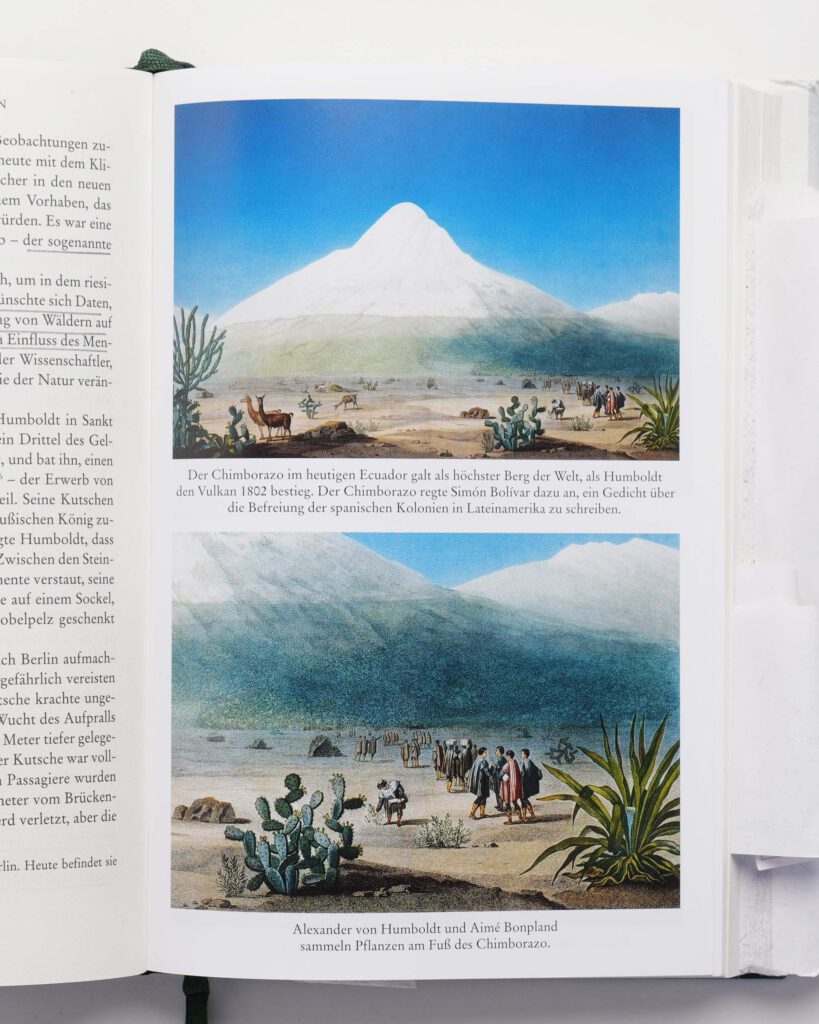
There is one name we cannot ignore if we wish to move through these regions of Latin America: Alexander von Humboldt. As we already mentioned during our time in Peru, it was he who shaped the modern conception of nature as we understand it today, for more than two hundred years.
As Andrea Wulf recounts in her recent biography, it is impossible to separate the early radical environmentalists of the nineteenth century from Humboldt’s vision of the cosmos. This is especially true after his journey through South America, where he was the first to climb nearly every volcano he saw on the horizon, as well as some of the highest mountains. In his letters, he described how the first monoculture plantations along the Orinoco River in the Amazon rainforest were already drying up rivers and exhausting the soil—centuries before any formal notion of global warming.
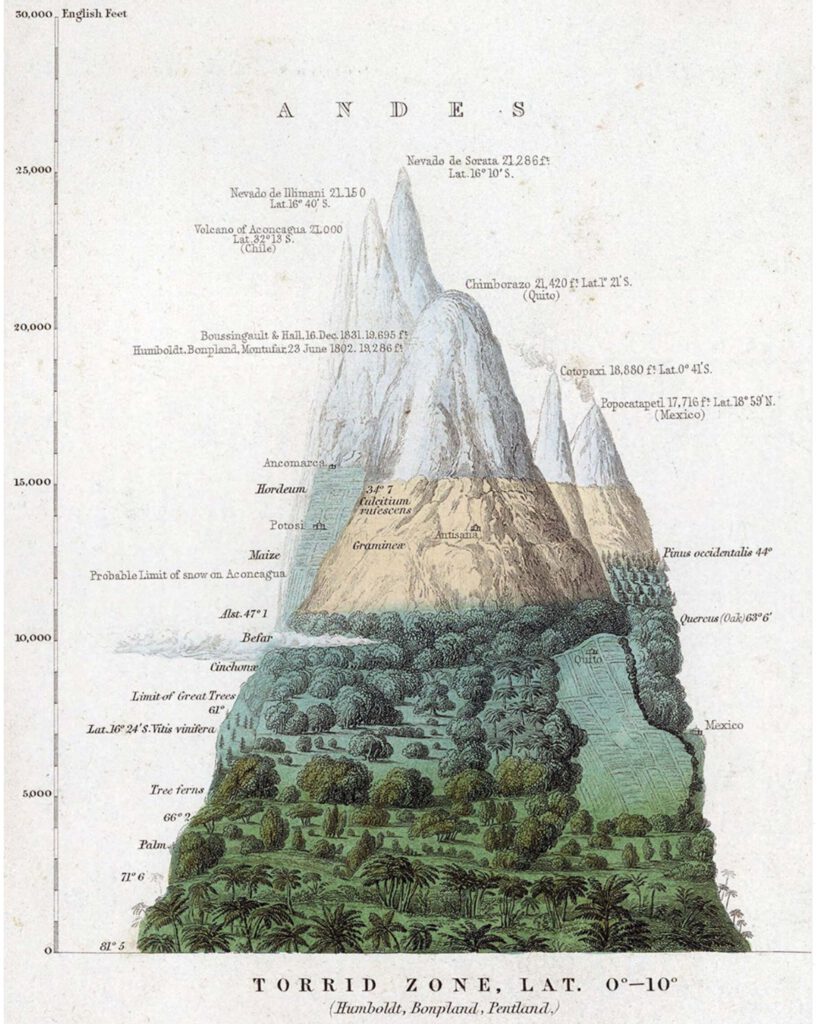
His geographical and geological maps are legendary, as are his representations of the world’s botanical zones. A meticulous observer of the natural world in its entirety, he still holds the record for the number of geographical locations named after him. After his encyclopedic work Kosmos, countless followers were deeply influenced by his ideas: Ralph Waldo Emerson claimed that no one knew nature better than Humboldt, and later Walt Whitman wrote Leaves of Grasswith a copy of Kosmos on his desk. Even Edgar Allan Poe, Henry David Thoreau, and his old friend Johann Wolfgang von Goethe drew inspiration from him when writing about nature in their most passionate works.
Photography and text: Nicolas Seegatz, from the first 7milamiglialontano travel team in South America, 2025